
Australian backyard mosquito: More of these non-native mosquitoes have been found in Santa Barbara County.

Several specimens of adult Aedes notoscriptus, aka the "Australian backyard mosquito" have been found recently at residences in the Westside and Mesa neighborhoods of the City of Santa Barbara.
Press release on the Australian Backyard mosquitoThis mosquito species is native to the southern Pacific Ocean region including Australia, Papua New Guinea, Indonesia, and the Phillipines. It has become established in New Zealand.
This mosquito is an aggressive, daytime biter which means if it becomes established here in Santa Barbara County it will severely impact our quality of life.
The backyard mosquito is highly adapted to living around humans and their dwellings. Female mosquitoes lay their eggs just above the water line in small containers and vessels that hold water, such as dishes under potted plants, bird baths and feeders, ornamental fountains, empty food and drink cans, children’s toys, discarded tires, yard drains, buckets, horse troughs, rain barrels and other sources (click here for examples).
Our technicians are also finding many residences with clogged yard drains. Please be sure to check your drains for clogs and, if they are, clear out the mud, leaves, silt and other debris so water can drain out. You can also add mosquito dunks - available at many hardware and home and garden stores - if there is standing water and you can't unclog the drain immediately.
Click on these links to see videos by fellow Mosquito Districts on how to screen your drains:
Greater Los Angeles Vector Control District
Fresno County Mosquito Control District
It's important for residents to look around their yard and outside their home and dump out even the smallest amount of standing water. Clean and scrub bird baths and pet watering dishes weekly and dump the water from overflow dishes under potted plants. Scrubbing destroys mosquito eggs that can hatch when the containers refill with water, even if the containers have been empty for several months.
In Australia, the backyard mosquito is the primary carrier of dog heartworm. A native species, Aedes sierrensis, the so-called treehole mosquito, is the primary vector of dog heartworm in California. Fortunately, medications are readily available to prevent dogs from getting the heartworm so be sure that your pet is protected. Consult your veterinarian for more information.
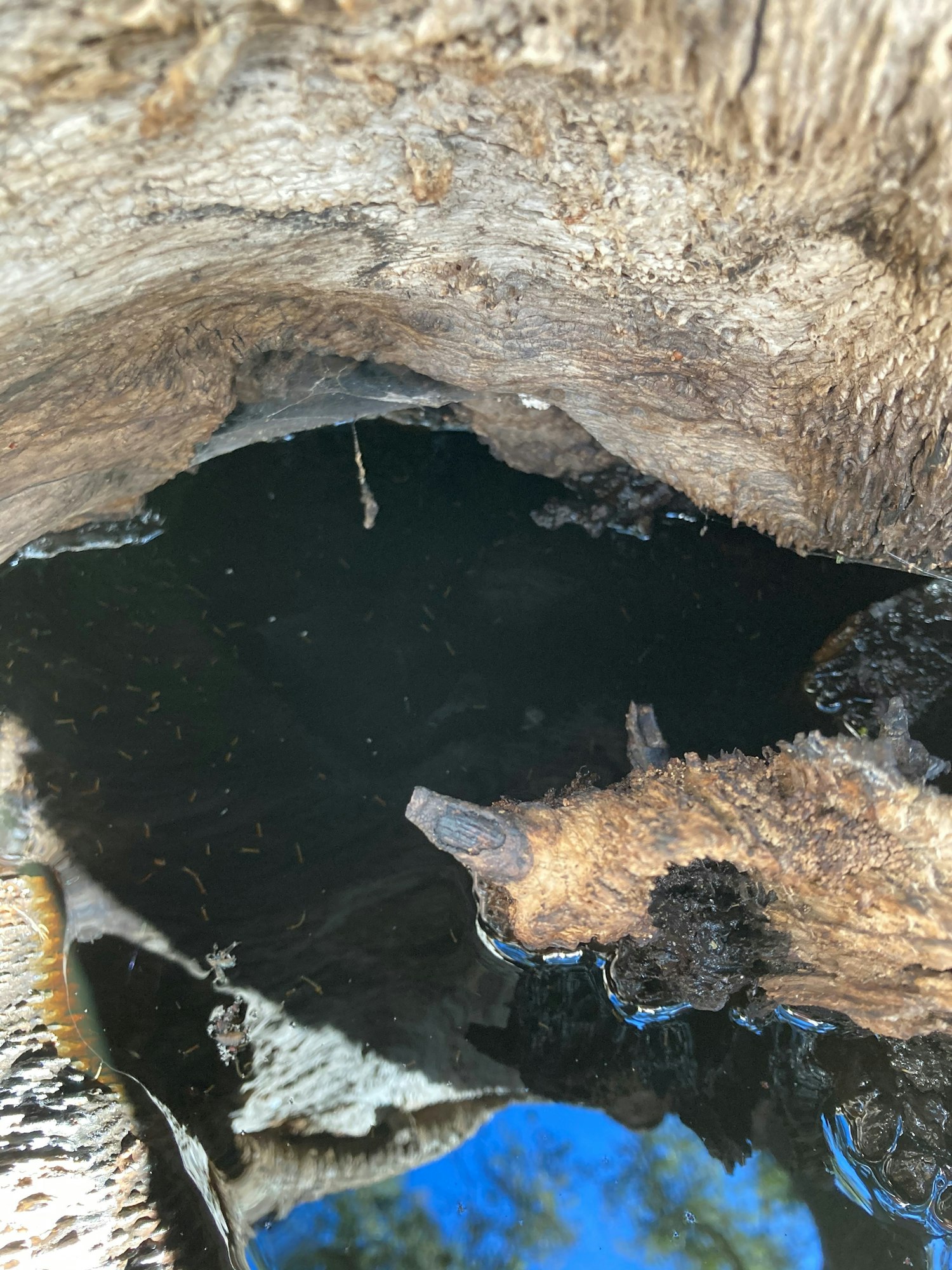
Treehole mosquitoes breed in the water that fills holes and cavities in trees. This mosquito is more commonly found in wooded areas and parks. Contact an arborist for professional advice on how to fill holes in trees on your property.

The Australian backyard mosquito looks very similar to the "ankle biter" mosquito, Aedes aegypti, which is found throughout southern California and northward up the Central Valley along the I-5 corridor to Shasta County. The major difference between these two species is the backyard mosquito has a band of white scales around the middle of the mosquito's "beak" (the proboscis).

California’s three non-native Aedes species (which includes the Asian tiger mosquito, Aedes albopictus) all share similar behavior, breeding sites, and eggs that are resistant to drying out - although Aedes notoscriptus blood-feeds only outdoors on a wider variety of animals.
Like all mosquitoes, only the females feed on blood. Male mosquitoes only feed on nectar (as will the females).
Please contact the Mosquito District if you suspect you might have any of these mosquitoes at your residence or place of business by calling us at 805-969-5050, or by filling out an online request at our "Contact Us" page.
Together, we can "Fight the Bite"!
For those of you who want to dive deeper and read more technical and detailed information about this mosquito, here is a research article from the Journal of Medical Entomology about the mosquito's spread through southern California:
Research article on Aedes notoscriptus
