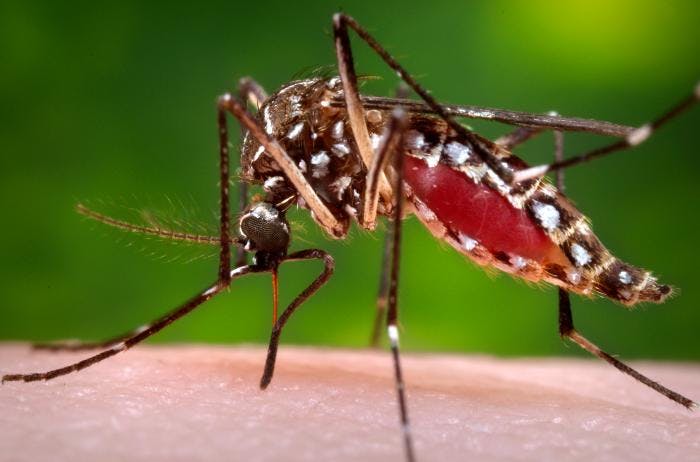
Invasive Mosquitoes
We need your help!
Please contact us, if you see these mosquitoes in Santa Barbara County.
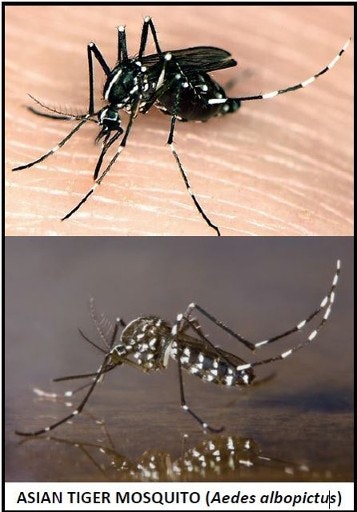
Unless viewed under a microscope, the Asian Tiger and Yellow Fever mosquitoes look almost identical to each other.

People in Southern California call these "ankle biters".

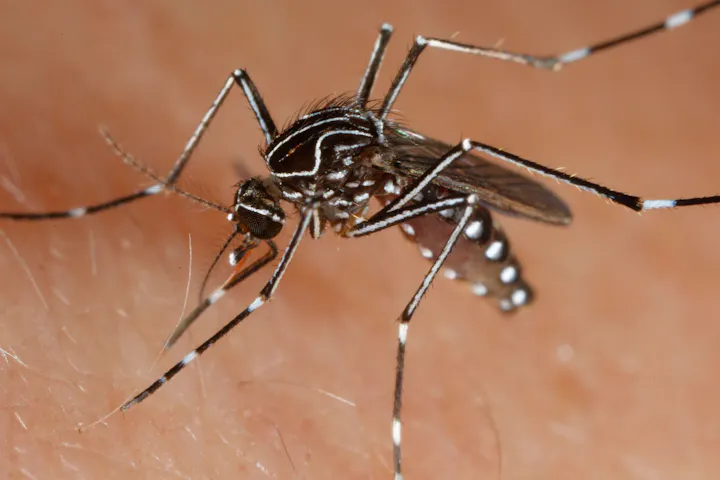
Close-up view of an Australian backyard mosquito. These mosquitoes are the same size and look almost identical to Yellow Fever and Asian Tiger mosquitoes. Photo credit: Lek Khauv - https://www.inaturalist.org
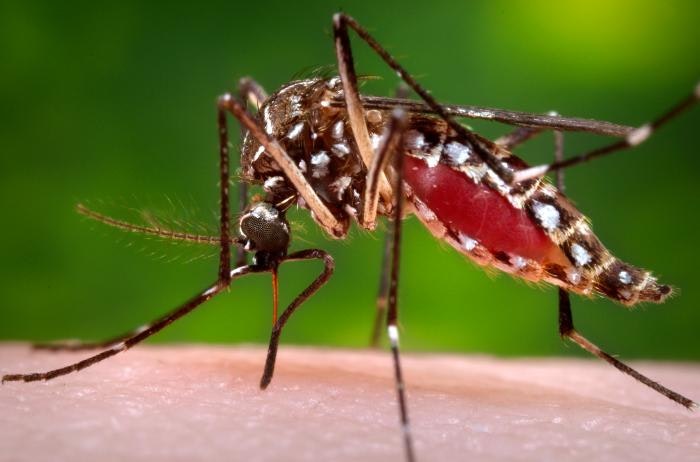
Close-up view of a yellow fever mosquito. Photo credit: CDC, James Gathany.
Invasive Aedes in California
Among the 29 counties in which one or both of these invasive mosquito species have been found are Santa Barbara, Los Angeles, Ventura, Fresno, Madera, Kern, Tulare, San Diego, Imperial, Orange, Alameda, Riverside, and San Mateo Counties:
- Aedes albopictus--Asian tiger mosquito
- Aedes aegypti--Yellow fever mosquito--discovered in Carpinteria in July 2026 and eastern Goleta Valley in October 2026.
- Aedes notoscriptus--Austalian backyard mosquito (found in Santa Barbara in March 2026).
These mosquito species:
- are small (1/4 inch long).
- are dark-colored with bright white markings.
- bite during daytime.
- may bite and reproduce indoors.
- prefer to feed on mammals, especially people.
- will lay eggs outdoors in buckets, potted plant pot saucers, old tires, toys, bird baths, water dishes, and any other types of containers, even plants, that are partially filled with water, along with many other yard sources.
- lay eggs that can survive for months on dry surfaces of containers.
- indoors, they breed in stagnant water sources such as vases, jars and saucers under potted plants.
- invasive Aedes larvae have even been found in water reservoirs in coffee makers, cups for toothbrushes, toilet brush holders, and Christmas tree stands.
- can transmit chikungunya, dengue, yellow fever, and Zika viruses, as well as dog heartworm.
- are not native to California - help us to "Fight the Bite" and prevent them from spreading throughout Santa Barbara County!