
Mosquito Trapping and Disease Reports
The District's 2020 to 2026 local disease surveillance reports are linked below. PDF copies of reports from March 2014 through 2019 are available upon request.
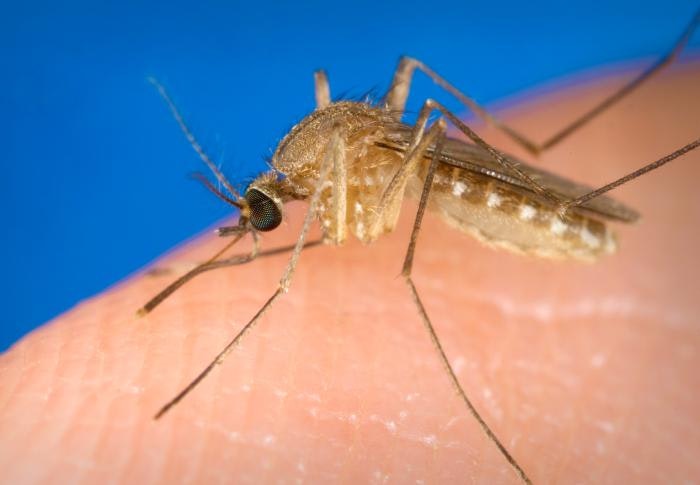
A Culex mosquito about to poke its needle-like mouthparts through the skin to begin taking up blood.
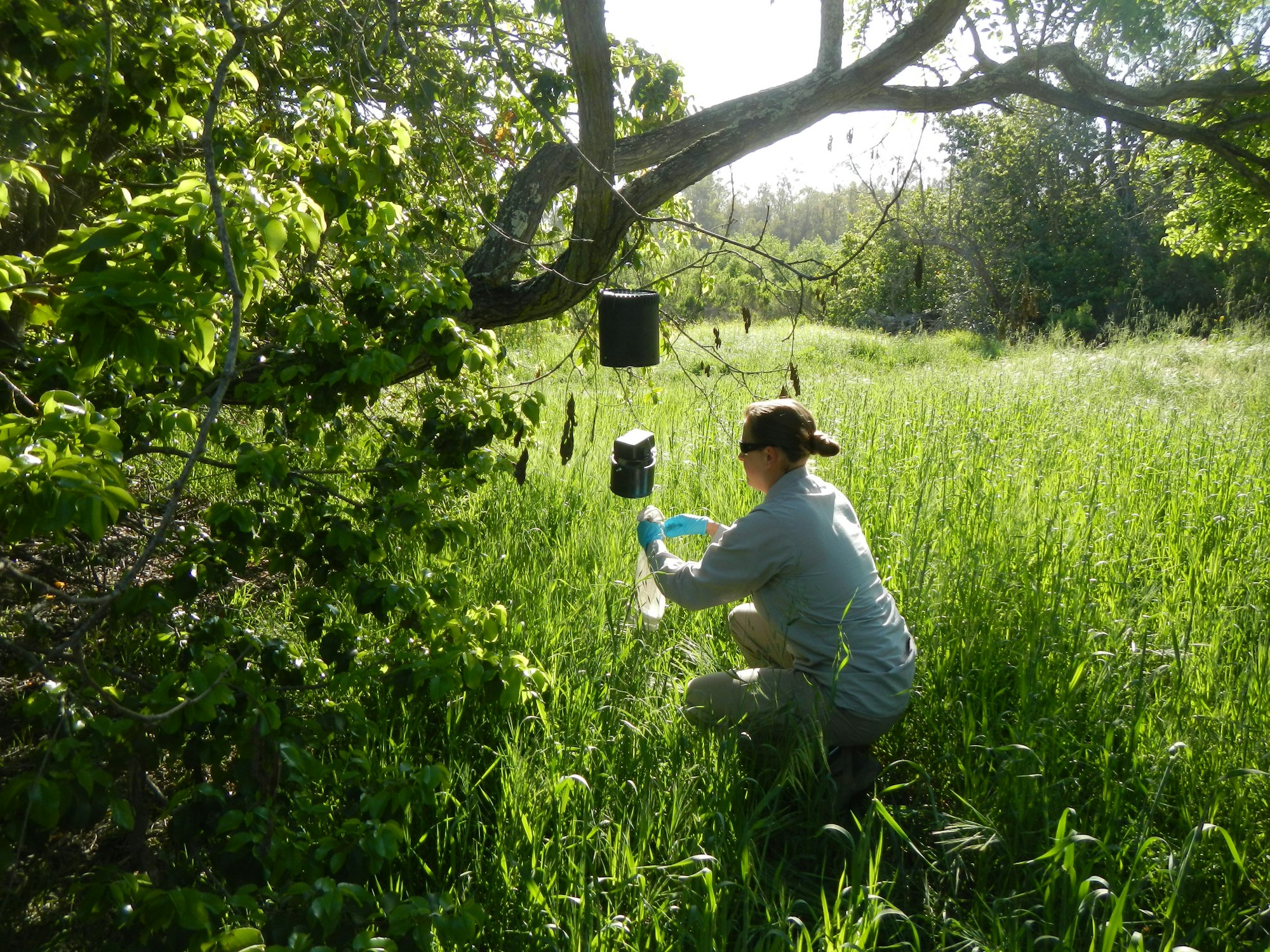
A technician setting up a mosquito trap. Mosquitoes are attracted to the trap by carbon dioxide coming from the small black bucket filled with dry ice. A small, battery-operated fan pulls the mosquitoes into the mesh bag hanging from the bottom.

A western black-legged tick, the vector of Lyme disease. Ticks wait on leaves and blades of grass for an animal or person to brush up against the plant and will latch on. When they sense something near them they begin waving their legs, a behavior called "questing".

Mosquitoes being sorted by species. Each pile of distinct species will be pooled together and sent to a laboratory at UC Davis to be tested for the presence of West Nile, St. Louis encephalitis and Western Equine encephalitis viruses.

A technician setting up another mosquito trap. Trapping provides information on mosquito abundance and activity in an area, the species of mosquitoes that are present, and provides samples that can be tested for viruses.

Mosquitoes ready to be identified under the microscope.
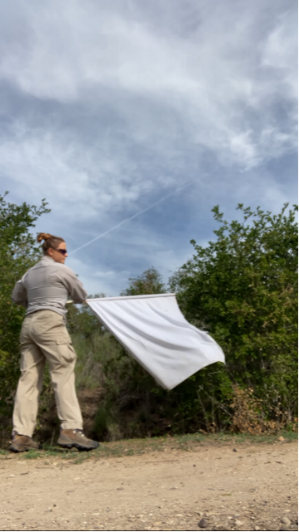
Flagging for ticks. Ticks on vegetation will grab onto the cloth as it is passed over it.